
Introduction
When you step into a supermarket, café, or restaurant in the UK, the fridges and freezers look simple: doors, shelves, and cooling systems. However, every unit has a detailed manufacturing process that blends engineering, compliance, and sustainability.
Understanding how commercial refrigeration is produced not only highlights its value but also helps businesses make smarter choices when investing in new equipment.
1. Design and Engineering
The production journey begins with design. Manufacturers focus on:
- Capacity and use — upright displays, multidecks, under-counter fridges, or walk-in cold rooms.
- Energy efficiency — optimised airflow, LED lighting, and high-grade insulation.
- Regulatory compliance — UK and EU standards such as Ecodesign and F-Gas regulations.
- Customer requirements — stylish finishes for retail, durable builds for kitchens, or modular systems for scalability.
Design teams use computer-aided design (CAD) software to model airflow dynamics, thermal insulation, and ergonomic access. Moreover, many new designs include natural refrigerants such as CO₂ or hydrocarbons, which align with the UK’s sustainability targets.
2. Fabrication of Components
After the design phase, the production of core components begins. Each part plays a crucial role:
- Cabinets and bodies — sheet steel or aluminium cut and shaped with CNC machinery, then insulated with high-density polyurethane foam.
- Doors and glazing — double- or triple-glazed panels, sometimes coated with low-E glass to prevent condensation.
- Cooling systems — compressors, condensers, and evaporators assembled for efficient performance with low noise.
- Electronics and controls — digital displays, defrost timers, and IoT-enabled sensors.
In addition, manufacturers maintain strict quality controls at every stage to ensure long-term durability.
3. Assembly Line Production
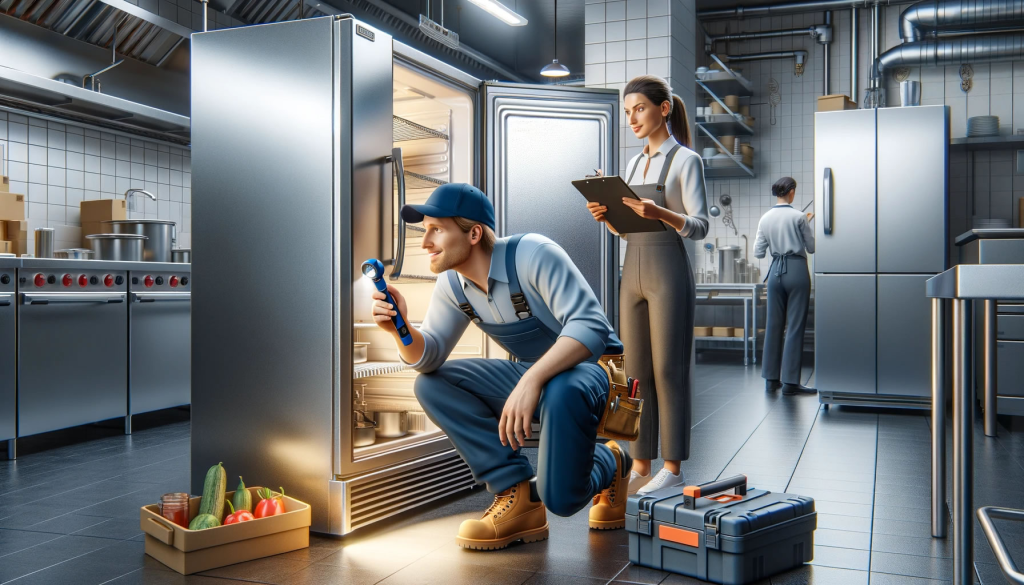
At the factory, workers bring components together on an assembly line:
- Cabinets are constructed and foamed for insulation.
- Cooling systems are mounted and connected.
- Electrical controls are installed.
- Shelving, lighting, and finishes complete the unit.
Each step follows UK energy labelling requirements and performance standards. As a result, the refrigerators are ready for safe and efficient use.
4. Testing and Quality Control
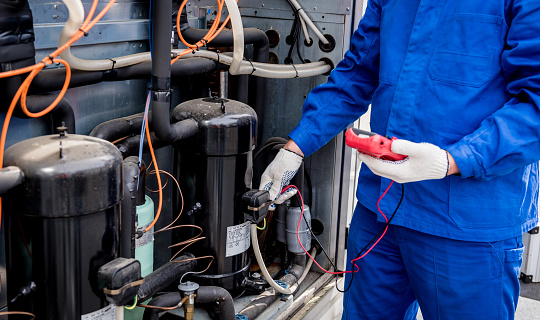
Before delivery, every refrigerator undergoes rigorous testing. For example:
- Leak detection in refrigerant lines
- Temperature stability checks under load
- Door seal inspections
- Electrical safety tests (UKCA and CE compliance)
Some manufacturers also use climate-controlled chambers to replicate real-world UK retail conditions. Therefore, units prove reliable in diverse environments.
5. Packaging, Logistics, and Delivery
Once approved, the equipment moves to the packaging stage. Protective wrapping, secure loading, and timed deliveries keep the units safe. In addition, logistics teams coordinate with shopfitters to minimise disruption to business operations.
6. Sustainability in Production
Sustainability plays a central role in commercial refrigeration production. Many UK and EU manufacturers now:
- Use CFC- and HFC-free refrigerants with low global warming potential (GWP).
- Improve insulation to reduce energy use.
- Recycle steel, aluminium, and glass.
- Design for modularity and repairability, extending product lifespans.
As a result, these practices support the UK’s net zero targets and create greener, more efficient refrigeration.
Conclusion
Commercial refrigeration is far more than shelves and cooling systems. It is the product of engineering, testing, and sustainable innovation.
We invite anyone interested to visit our production area in Konya, Turkey, and see how our high-quality product lines come to life with the support of our amazing team!
Follow us on Socials;